Wallet Edge Finishing: Painted vs Folded Edges
Painted or folded? The edge of a wallet decides its price tier. Learn how each finish is made, what it costs, and how to judge edge quality on a sample.
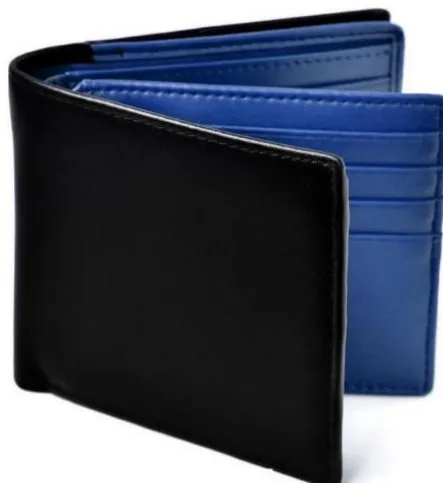
The edge of a wallet is where quality shows first — and where the price tier is decided. A painted edge gives a clean, sealed finish for slim, structured wallets. A folded edge wraps the leather around the rim for a softer, more durable feel on thicker, premium builds. If you source wallets at volume, knowing which finish fits your price tier — and how to check it on a sample — saves you returns and rework. Here is how both finishes work, what they cost, and what to ask your factory before you order.
What is wallet edge finishing?
Cut a wallet open and you will see layers: outer leather, lining, card-slot panels, sometimes a stiffener. Left raw, those cut edges fray, absorb moisture, and look unfinished. Edge finishing seals and dresses the rim so the wallet looks complete and holds up in daily use.
There are two mainstream methods. Edge painting builds up thin coats of flexible paint, sanded between coats, until the rim is smooth and sealed. A folded edge thins the outer leather at the rim and folds it over, usually glued and stitched, so leather wraps the rim. Neither is better in every case — the right choice depends on the leather, the wallet structure, and the price tier you target.
Edge painting: how it works and where it wins
Painting starts with a clean, straight cut. The maker applies a coat of edge paint, lets it dry, sands it smooth, and repeats until the edge is even and sealed, then polishes it to a slight sheen. The paint is colour-matched to the leather.
Painted edges win on slim, structured wallets — bifolds, card holders, money clips — where a folded edge would add bulk the design cannot afford. The process is repeatable and needs no hand folding, so labour time stays down. That is why painted edges are the standard finish at mid price tiers.
The limits are honest. Paint is a coating, and it can crack if applied too thick, if the leather flexes hard at the same spot every day, or if coats were rushed without sanding between them. The quality of a painted edge is decided less by the method than by how carefully the coats are built up.
Folded edges: how they work and where they win
A folded edge starts at the cutting table. The leather at the rim is skived — thinned down — so it can bend over the edge without a bulky ridge. The maker folds it around the rim, glues it to the lining side, and usually stitches through the fold to lock it in place. The result is an edge that is leather on every side, with no coating to crack.
Folded edges win where softness and durability matter most: premium bifolds and trifolds, long wallets, and any style where the buyer runs a thumb along the rim and judges the wallet by feel. The finish ages with the wallet instead of wearing off it.
The trade-off is labour. Skiving, folding, gluing, and stitching a clean fold takes a skilled hand and more time per piece than painting, and it adds slight thickness at the rim — a poor fit for ultra-slim card holders. Very stiff or thick leather also resists a tight fold, so material and edge choices must be made together.
Painted vs folded: side by side
- Look: painted edges give a crisp, colour-matched line; folded edges give a soft, all-leather rim.
- Feel: painted edges feel smooth and sealed; folded edges feel rounded and supple.
- Durability: a well-painted edge holds up for years on a structured wallet; a folded edge has no coating to crack, so it tends to outlast paint on styles that flex a lot.
- Labour: painting is faster and more repeatable; folding needs more skilled handwork per piece.
- Cost tier: painted edges are the norm at mid tiers; folded edges usually sit one tier higher because of the extra labour.
- Best for: painted edges suit slim bifolds, card holders, and money clips; folded edges suit premium bifolds, trifolds, and long wallets.
One warning matters more than the table: a badly done folded edge costs more than a well-done painted edge. Method alone does not guarantee quality. Judge the finish on the sample in your hand, not on the name of the technique.
Why edge finishing decides the price tier
Three things move the cost: labour time, skill level, and the reject rate. Painting is a repeatable bench process. Folding is skilled handwork, and a fold that is slightly off must be redone — it cannot be patched the way a painted edge can be touched up with another coat.
That makes edge finishing a useful price-tier signal. If two quotes look far apart for the same wallet, ask what edge finish each includes. A quote assuming painted edges will come in lower than one assuming folded edges.
At Topwell the terms are simple: 200 pcs minimum per style, sampling in 7–10 days, and production in 15–25 days depending on the product. Sampling is the moment to compare finishes — order a painted-edge sample and, where the design allows, ask for a folded-edge version, then judge both in your hand before committing to a production run.
How to judge edge quality on a sample
Do not take the finish on trust. Run this checklist on every sample that arrives:
- Run your fingertip along the edge. It should feel smooth and even, with no ridges, bumps, or sticky spots.
- Flex the wallet open and closed. A painted edge should not crack or flake at the fold points; a folded edge should not gap or lift.
- Look closely at the corners, where rushed work shows. Paint should cover evenly; a fold should sit flat with no glue showing.
- Check the colour match. Edge paint should match the leather, not sit a shade off; a fold should be the same leather as the body.
- Inspect the stitching. Where a fold is stitched, stitches should be even and tight, with no loose thread at the ends.
- Ask for the pre-production sample. At Topwell, QC runs on pre-production samples plus in-process inspection — approve the edge finish on the pre-production sample, and it becomes the standard for the production run.
If a sample fails any check, say so before production starts. Fixing an edge problem after 200 pieces are cut costs far more than fixing it on one sample.
What to specify in your order
Put the edge finish in writing, in the same brief as the rest of the specification:
- Finish type: painted or folded, and which edges — all visible edges, or only the outer rim.
- Paint colour: matched to the leather, or a contrast colour if that is the design intent.
- Acceptance standard: the approved pre-production sample is the reference for the production run.
- Packing: standard packing is an OPP bag or PE bag with an inner box, with a custom logo box available — good packing protects edges in transit, especially by sea.
- Customisation: material, logo, and hardware are all customisable, so the edge finish can be specified alongside embossing, debossing, or foil stamping.
Send your design pictures, target size, logo, and material choice, and you will get a quote first, then a sample. That order — quote, then sample, then production — is how you lock the edge finish before it becomes a problem.
Ready to check an edge finish in your hand?
Browse the range in our product catalog, see how sampling and QC work on our OEM / ODM page, or send your design and material brief through our contact page and we will quote first, then sample.